Thick vs. Thin HVAC Air Filters: Understanding MERV Ratings and Choosing the Right Filter for Your Home

When most homeowners replace their HVAC air filter, they focus on one thing—finding the right size. However, there are two equally important factors that determine how well your filter performs: its thickness and its MERV rating. These two characteristics work together to affect your home's indoor air quality, your HVAC system's efficiency, and even the lifespan of your heating and cooling equipment.
Many people assume that the thickest filter with the highest MERV rating must be the best choice. While that sounds logical, it's not always true. Installing the wrong filter can actually make your HVAC system work harder, increase your energy bills, and even lead to expensive repairs. Understanding how thickness and MERV ratings work together will help you choose a filter that keeps your home comfortable while protecting your HVAC investment.
What Is a MERV Rating?
MERV stands for Minimum Efficiency Reporting Value, and it measures how effectively an air filter captures airborne particles. The higher the MERV rating, the smaller the particles the filter can trap. This includes everything from household dust and pollen to pet dander, mold spores, smoke particles, and even certain bacteria.
For most homes, a MERV rating between 8 and 11 provides an excellent balance between filtration and airflow. Homeowners with pets or allergy concerns often benefit from filters in the MERV 11 to 13 range. Filters rated MERV 13 through 16 offer exceptional filtration but should only be used if your HVAC system is designed to handle the added resistance.
One of the biggest misconceptions is that a higher MERV rating is always better. In reality, if your HVAC system isn't designed for a high-efficiency filter, airflow can become restricted. This forces the blower motor to work harder and may lead to frozen air conditioner coils, furnace overheating, increased energy costs, and unnecessary wear on your system.
Understanding Filter Thickness
Filter thickness is measured in inches, with the most common residential options being 1-inch, 2-inch, 4-inch, and 5-inch filters.
Although many homeowners believe thicker filters restrict airflow, the opposite is often true. Because thicker filters contain much more filtering material, air is spread across a much larger surface area. This allows the filter to collect more dust while maintaining better airflow over a longer period of time.
1-Inch Filters
The standard 1-inch filter is found in the majority of homes. They're affordable, easy to replace, and available almost everywhere. For most homeowners, a MERV 8 filter is an excellent choice, while systems designed for it may also perform well with a MERV 11 filter.
The downside is that 1-inch filters have very little dust-holding capacity. As they become dirty, airflow decreases much more quickly than with thicker filters. Most should be replaced every one to three months depending on pets, allergies, and overall dust levels.
2-Inch Filters
A 2-inch filter offers noticeable improvements without requiring a large filter cabinet. Because it contains more filter media than a 1-inch filter, it can capture more contaminants while maintaining better airflow.
These filters generally pair well with MERV ratings between 8 and 13, making them a great option for homeowners looking to improve indoor air quality without significantly increasing airflow resistance.
4-Inch Filters
Many newer HVAC systems include a media cabinet designed for 4-inch filters. These filters are often considered the "sweet spot" between filtration, airflow, and maintenance.
Their increased surface area allows them to trap far more dust while creating less resistance than many thinner filters. Most homeowners can comfortably use MERV 11 or MERV 13 filters in these systems while still maintaining excellent airflow.
Another advantage is longevity. A quality 4-inch filter often lasts six to twelve months before needing replacement.
5-Inch Filters
Five-inch filters are designed for premium HVAC systems equipped with large media cabinets. They offer the greatest dust-holding capacity and can maintain excellent airflow even while capturing extremely fine airborne particles.
Because of their large surface area, these filters can often support MERV ratings between 11 and 16 without placing excessive strain on the HVAC system. They're an excellent choice for homeowners with allergies, asthma, multiple pets, or anyone looking for the highest level of indoor air filtration.
The tradeoff is cost. Five-inch filters are more expensive and require an HVAC system specifically designed to accommodate them.
Which Filter Is Best?
For the average homeowner, the answer isn't necessarily the thickest filter or the highest MERV rating. Instead, it's the filter your HVAC system was engineered to use.
A 1-inch MERV 8 filter works well for many standard residential systems. If your system has a media cabinet, a 4-inch MERV 11 or MERV 13 filter is often one of the best combinations available, providing excellent filtration, long service life, and outstanding airflow.
Before upgrading to a higher MERV filter, always consult your HVAC manufacturer's recommendations or speak with an HVAC professional. Choosing the wrong filter may actually reduce your system's performance rather than improve it.
Your Filter Is Only the First Line of Defense
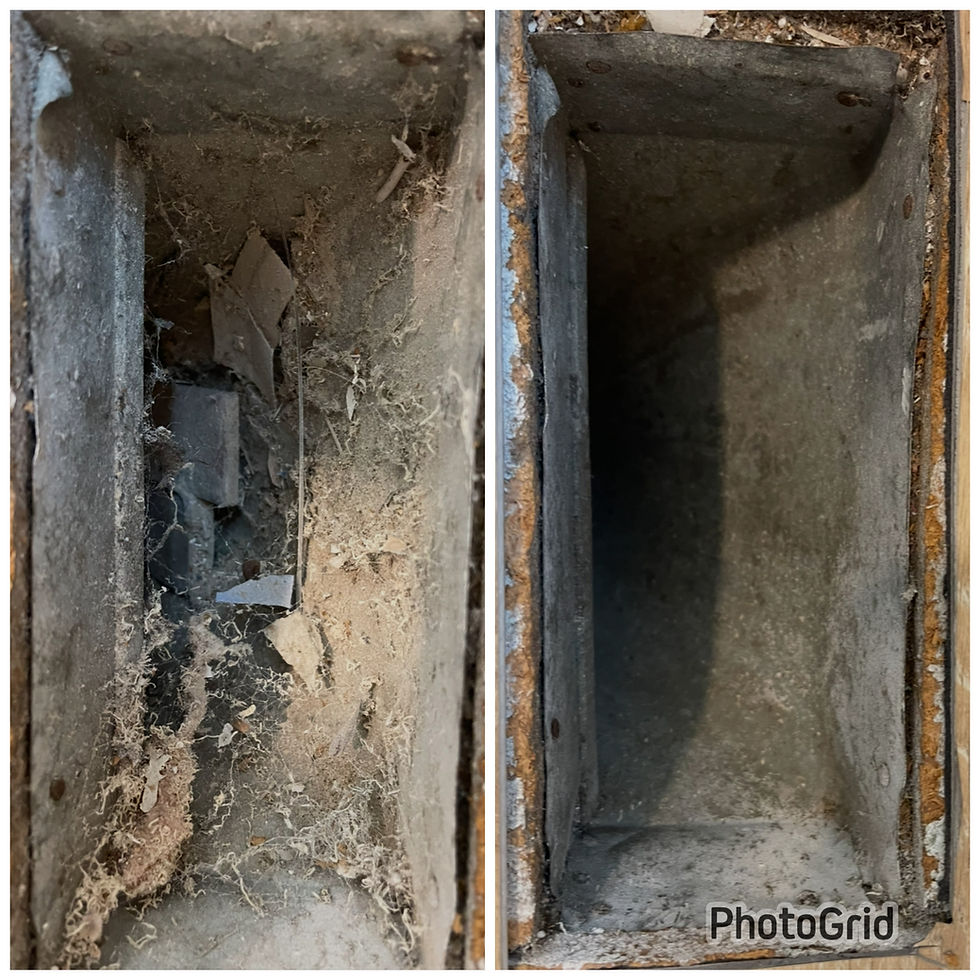
Even the highest-quality HVAC filter can't capture every airborne particle. Over time, fine dust, pet hair, pollen, and other debris continue to settle inside your ductwork. As this buildup accumulates, it can circulate throughout your home every time your heating or cooling system runs.
Replacing your filter regularly is one of the best things you can do for your HVAC system, but pairing that maintenance with professional air duct cleaning helps keep your entire system operating at peak efficiency.
At Wake Forest Duct Cleaning, we help homeowners breathe cleaner air by removing years of accumulated dust and debris from their ductwork. Whether you're unsure which filter is right for your HVAC system or it's been several years since your last duct cleaning, our team is here to help.
Cleaner filters. Cleaner ducts. Cleaner air. That's the Wake Forest Duct Cleaning difference.


Comments